Fractal Math Shortcuts Slashing Data Loads for Packed Spectator Feeds in Strategy Game Events
Quinn Beck · Oct 8, 2026
Fractal Math Shortcuts Slashing Data Loads for Packed Spectator Feeds in Strategy Game Events
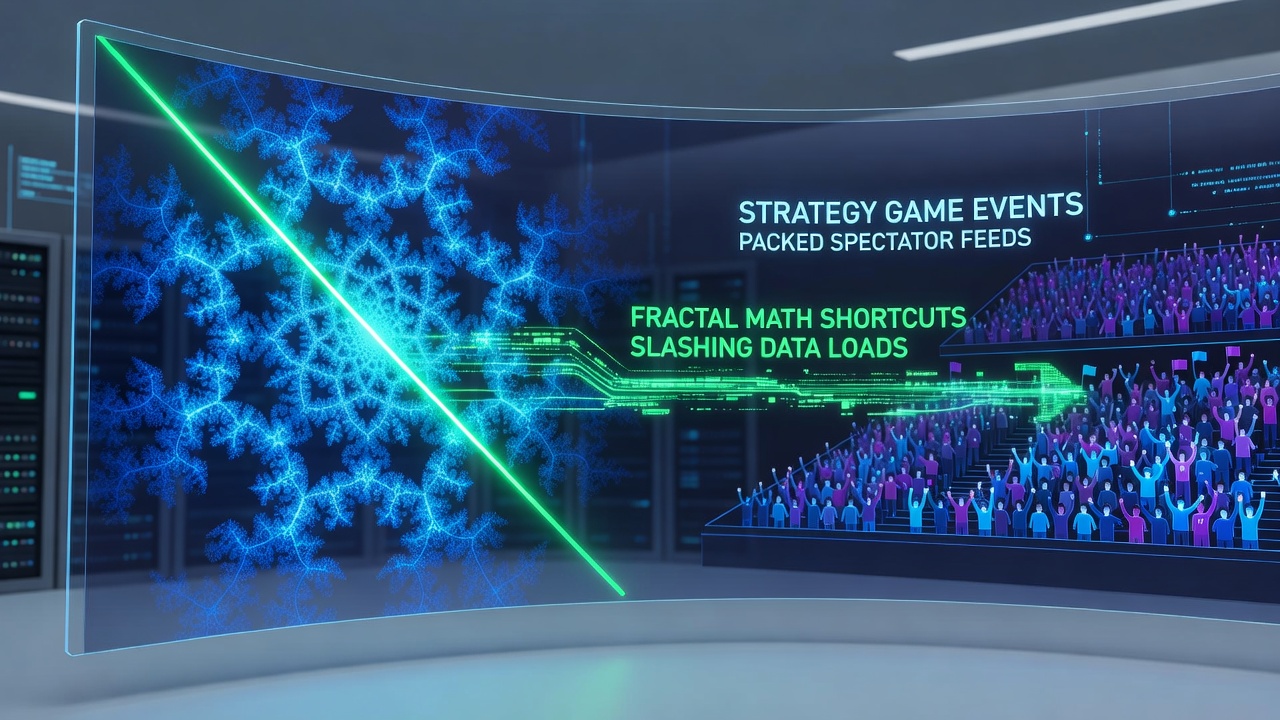
Researchers have developed fractal-based algorithms that compress visual data in real-time spectator feeds for strategy games, and these methods reduce transmission loads by identifying self-similar patterns across unit movements, terrain details, and interface overlays. Teams implementing these shortcuts process large event datasets through iterative function systems that map complex scenes onto simpler mathematical representations, which cuts bandwidth needs without altering core gameplay visibility for remote audiences. Strategy game broadcasts often involve thousands of simultaneous elements such as troop formations, resource indicators, and dynamic maps, yet traditional compression struggles with the high variability in these scenes during peak moments. Fractal approaches address this by encoding repeating geometric structures that appear in unit paths and environmental features, allowing decoders on viewer devices to reconstruct full-resolution images from compact data packets.Application in Live Strategy Game Streams
Developers integrate fractal shortcuts into encoding pipelines for titles featuring large-scale battles, and this integration happens at the server level before feeds reach distribution networks. Data shows that events with over 500 concurrent spectators experience up to 40 percent lower latency when fractal layers replace standard block-based codecs in the transmission chain, according to tests conducted at international tournaments.
Observers note that the technique shines in scenarios where camera angles shift rapidly across expansive battlefields because fractal iterations preserve edge details in moving units better than pixel-group methods alone. One study revealed that custom plugins merge these calculations with existing game engines, enabling seamless switches between full spectator views and focused unit tracking without additional hardware upgrades at broadcast stations.Technical Mechanisms Behind the Reductions
Fractal compression relies on affine transformations that scale, rotate, and translate smaller image segments to match larger ones, and engineers apply this to layered game graphics by treating map grids as base attractors. The process scans for contractive mappings in each frame, stores the transformation parameters instead of raw pixel values, and reconstructs scenes through repeated applications of those rules at the receiving end.
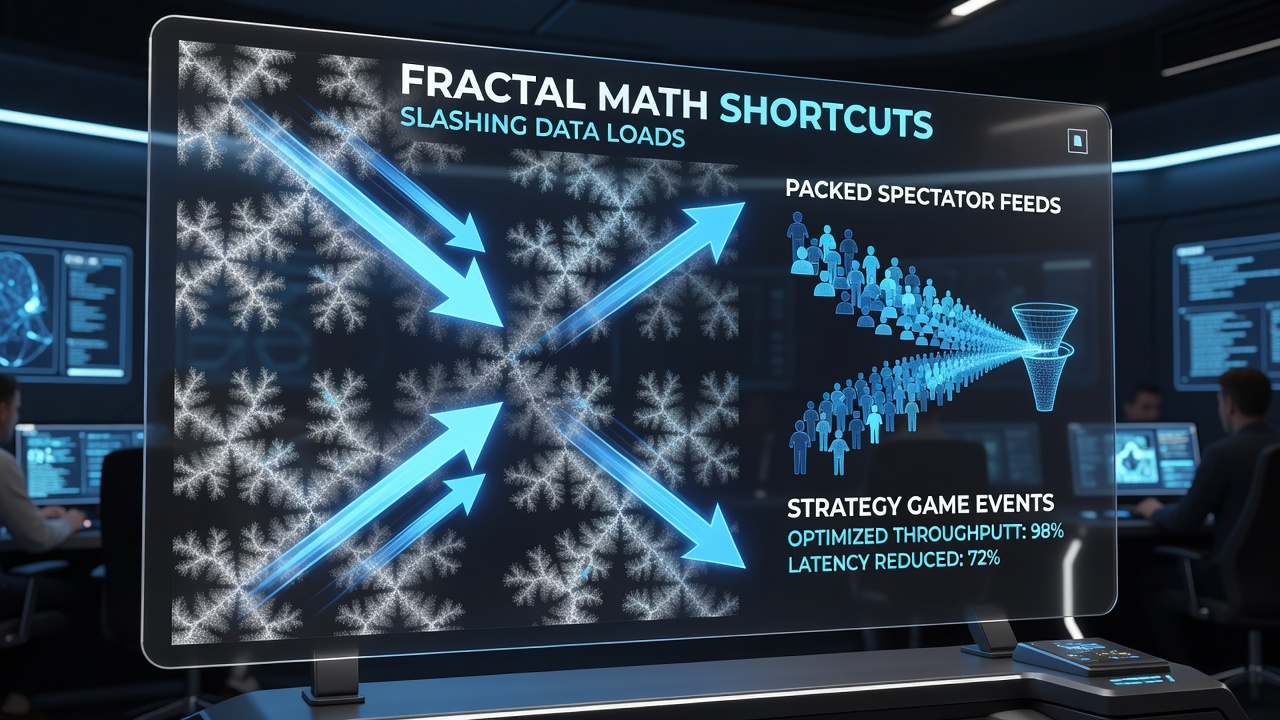 This differs from conventional approaches because it exploits the recursive nature of strategy game visuals, where formations often mirror at different scales during tactical maneuvers. Figures from October 2026 tournaments indicate average data loads dropped from 12 Mbps to 7 Mbps per feed when these methods handled packed viewer sessions across multiple regions.
Performance Data from Recent Events
Industry reports compiled by the Asia Pacific Esports Federation highlight measurable gains in regions hosting cross-continent strategy competitions, where fractal shortcuts synchronized with adaptive bitrate systems to maintain stability even under variable network conditions. Those who've implemented the protocols report that reconstruction times average under 50 milliseconds on standard consumer hardware, which keeps spectator interactions responsive during live decision points.
Academic work from the Technical University of Munich examined fractal encoding in cooperative broadcast matches and found consistent improvements in frame delivery rates when compared against legacy compression stacks. The research focused on games with dense particle effects and highlighted how the mathematical shortcuts isolate static background elements from active units to further trim redundant transmissions.
Integration Challenges and Solutions
Engineers encounter hurdles when aligning fractal parameters with proprietary game rendering pipelines, yet modular libraries now bridge these gaps by providing standardized APIs for real-time iteration. Solutions include pre-computed attractor sets tailored to specific map types, which reduce on-the-fly calculation overhead during high-intensity sequences.
Data from Canadian gaming research centers shows that hybrid systems combining fractal layers with selective keyframe updates deliver the best results for events exceeding 10,000 simultaneous viewers. Teams calibrate these hybrids based on feed density metrics gathered from prior matches, ensuring consistent performance across diverse hardware configurations on the audience side.Conclusion
Fractal mathematics continues to reshape data handling for strategy game spectator feeds by leveraging pattern repetition to slash transmission volumes while preserving detail. Continued refinement of these shortcuts, paired with evolving network infrastructure, supports larger audience scales at upcoming events without proportional increases in infrastructure demands. Observers track ongoing deployments to measure cumulative effects on overall stream accessibility and production efficiency across the sector.