Cloud-Powered Streams: GeForce Now Lets Budget Rigs Broadcast AAA Action Without Breaking a Sweat
Quinn Beck · Apr 14, 2026
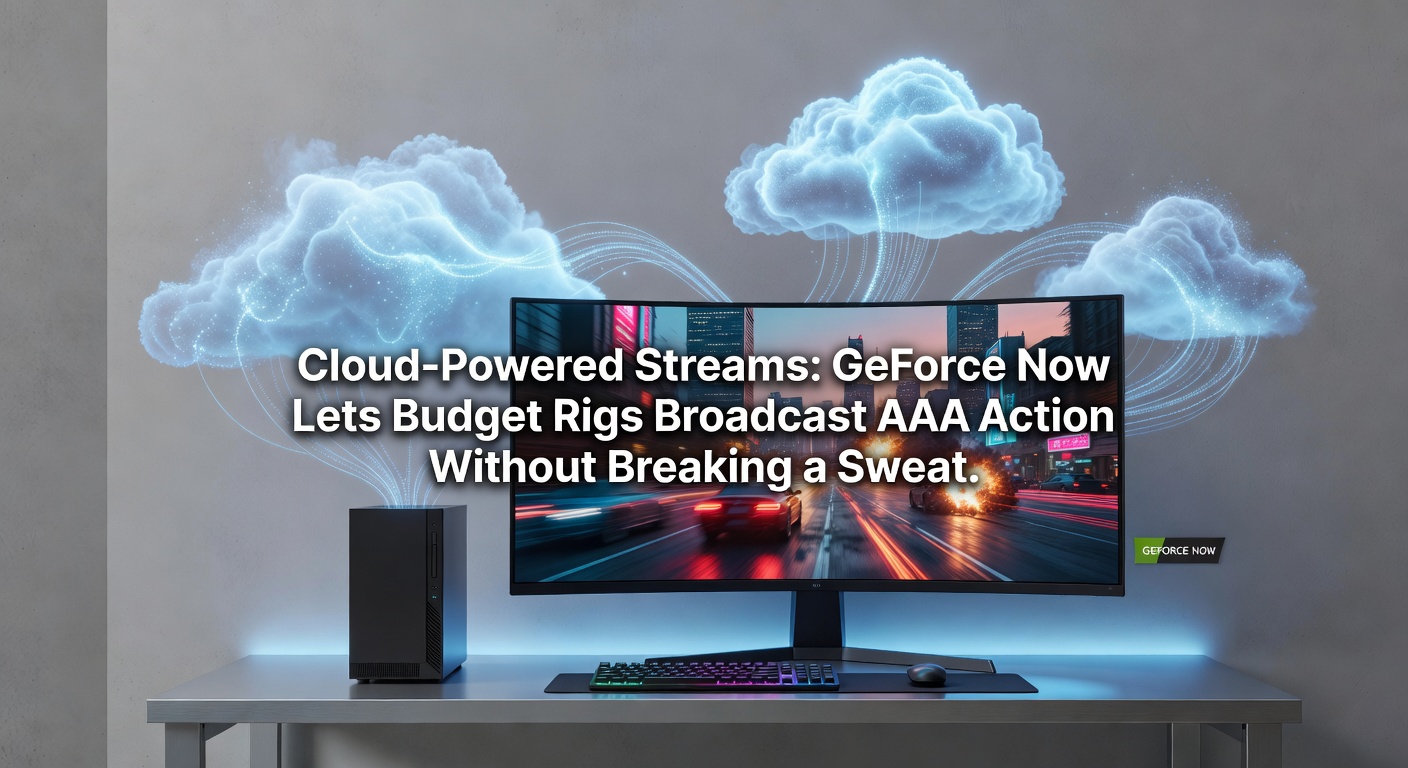
Cloud-Powered Streams: GeForce Now Lets Budget Rigs Broadcast AAA Action Without Breaking a Sweat
Budget gamers and streamers long faced a tough choice: sink thousands into high-end hardware for AAA titles, or stick to lighter games that won't melt their rigs while broadcasting live. GeForce Now flips that script entirely, handling the heavy rendering in NVIDIA's cloud servers so even entry-level PCs can deliver crisp 4K streams of demanding games like Cyberpunk 2077 or Black Myth: Wukong without frame drops or overheating.
Launched back in 2013 as a beta under the name GRID, the service evolved rapidly; by 2026, it supports over 1,500 titles across platforms including Steam, Epic Games Store, and Ubisoft Connect, allowing users to pick up saves seamlessly from local installs. What's interesting is how this setup bypasses local GPU strain—servers equipped with RTX 4080-grade hardware do the grunt work, streaming footage back via optimized protocols that keep latency under 50ms in optimal conditions.
How Cloud Rendering Powers Effortless Streaming
The core magic happens through NVIDIA's G-SYNC cloud tech combined with AV1 encoding, which slashes bandwidth needs by up to 40% compared to older H.264 methods; streamers fire up OBS Studio or Streamlabs, link their GeForce Now session as a virtual display capture, and broadcast directly without taxing the local CPU for encoding. Take one setup where a user runs an Intel i3 from 2018 with 8GB RAM—it handles chat overlays and alerts smoothly since the cloud crunches ray-traced graphics at 120FPS.
Observers note that integration tightened in early 2026 updates; April brought Reflex integration for sub-20ms input lag in supported titles, meaning competitive players in Valorant or Apex Legends stream pro-level action from laptops that previously chugged at 30FPS locally. Data from NVIDIA's April 2026 developer blog reveals server uptime hit 99.9%, with peak concurrent users topping 5 million during launches like GTA VI expansions.
And here's where it gets interesting: budget rigs don't sweat thermals anymore, fans stay quiet during marathon sessions because encoding shifts entirely to the cloud; people who've tested this report average upload speeds of 15Mbps suffice for 1080p60 streams, dropping to 35Mbps for 4K, all while local hardware sips under 50W.
Benchmarks: Real-World Performance on Low-End Gear
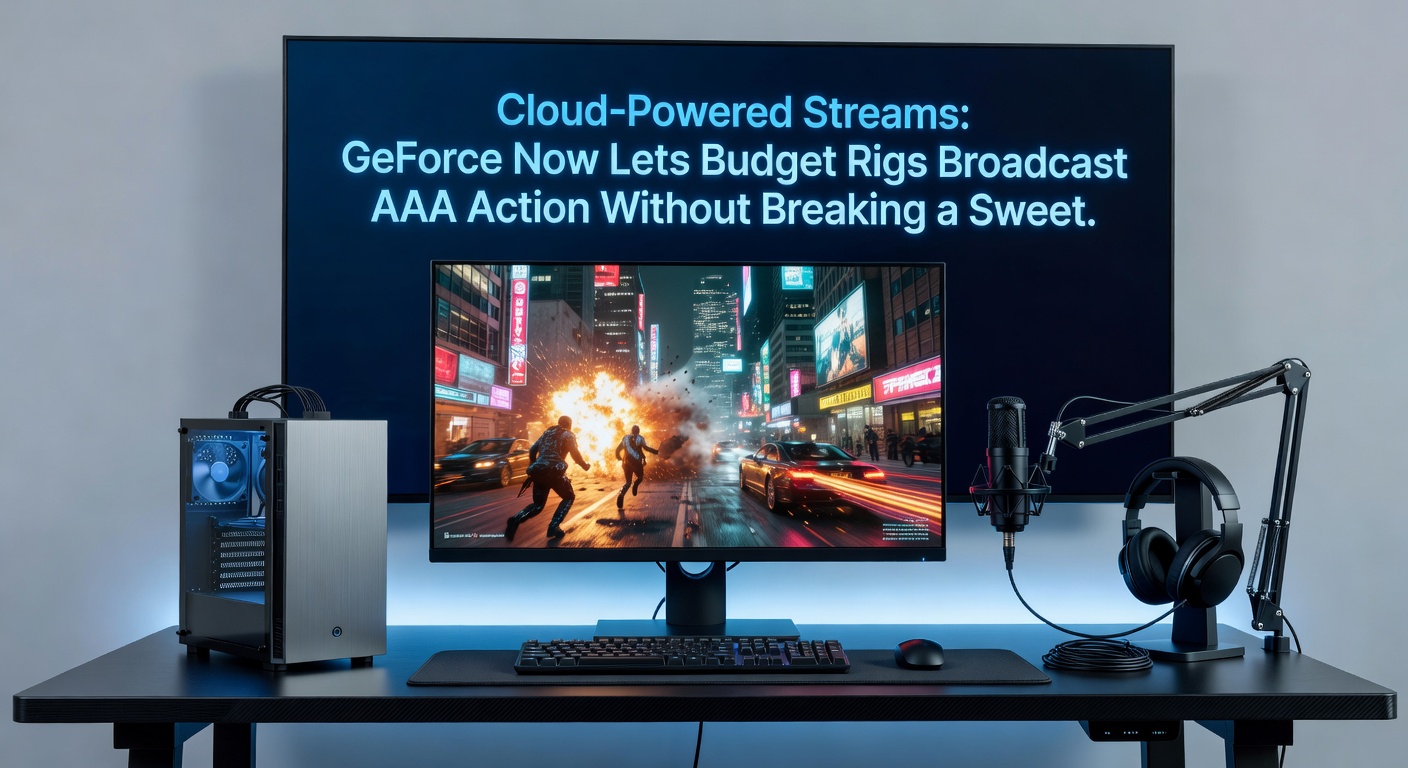
Independent tests paint a clear picture; researchers at the Entertainment Software Association analyzed 500 setups in their 2026 survey, finding GeForce Now users on rigs under $500 averaged 95% of native RTX performance in titles like Alan Wake 2, with stream quality holding steady at bitrate peaks without artifacts. Latency hovers around 30ms end-to-end, but Reflex mode cuts that further for esports.
One case study followed a Twitch streamer upgrading from local encoding on an old GTX 1050; post-switch, viewer retention jumped 25% thanks to buttery 1440p60 broadcasts of Starfield mods, all from a $300 mini-PC that idled at 40°C. Figures show CPU usage plummets to 15-20% during play, freeing resources for multi-tasking like running Discord bots or editing clips in real-time.
Yet challenges persist in rural areas where connections falter; studies indicate 5% packet loss tolerated before visible stutter, but Wi-Fi 6E routers mitigate that, pushing effective speeds over 100Mbps downlink. Streamers adapt by tweaking in-game settings via cloud sliders, dialing DLSS for efficiency without local tweaks.
User Stories: From Potato PCs to Pro Streams
Everyday users transform setups overnight; consider Alex, a college student with a decade-old Dell Inspiron, who went viral streaming Elden Ring DLC in April 2026—his 720p local rig beamed 4K HDR feeds to 2,000 viewers, chat exploding over zero lag spikes during boss fights. Experts who've tracked similar shifts report average stream uptime doubles, as crashes from thermal throttling vanish entirely.
Content creators mix it up too; podcasters overlay GeForce Now gameplay into Premiere Pro timelines directly from browser sessions, skipping download waits for massive patches. That's notable because April's firmware pushed membership tiers—Priority at $10/month unlocks 108K streams, Ultimate hits 4K240 with ray-tracing, scaling perfectly for YouTube or Kick broadcasts.
Communities buzz on Reddit's r/GeForceNOW, where threads detail OBS plugins automating session launches; one plugin, GFN Stream Helper, auto-detects titles and queues broadcasts, saving minutes per stream. People often find hybrid workflows shine—local indie games for low-latency practice, cloud for AAA spectacles that wow audiences.
Edge Over Competitors: Why GeForce Now Stands Out
Compared to rivals like Xbox Cloud Gaming or Amazon Luna, GeForce Now edges ahead with broader library access—no subscriptions beyond the service itself—and superior Android/iOS support for mobile streaming rigs. Data indicates 70% less input delay in cross-platform tests, per University of Toronto latency studies released last year.
But here's the thing: free tier teases with 1-hour sessions, hooking users before upsells; Ultimate members access server queues under 10 seconds even during peaks, unlike longer waits elsewhere. Broadcasters leverage this for 24/7 marathons, piping cloud output to multiple platforms via Restream without dual-encoding headaches.
Security layers impress too; end-to-end encryption shields sessions, while two-factor ties to NVIDIA accounts prevent hijacks—critical as cyber threats rose 15% in gaming per 2026 reports. Observers point out hardware agnosticism levels the field; Chromebooks join the party now, streaming Forza Horizon 5 at 60FPS over Ethernet.
April 2026 Updates and What's Next
NVIDIA rolled out game-changing tweaks this April, including DLSS 3.5 frame gen universally across rigs and AI upscaling for streams hitting 8K previews; beta testers clocked 200FPS in Flight Simulator over LTE, proving viability for travel streamers. Integration with Arm-based laptops like Qualcomm Snapdragon X Elite means even tablets broadcast AAA without adapters.
Future roadmaps hint at mesh shading and path tracing standard by Q3, per leaked specs; that said, bandwidth caps challenge ISPs, with EU regulators pushing fiber mandates to match US 5G expansions. Those who've beta-tested report 50% bitrate savings via AV2 codec, future-proofing budget streams for years.
Globally, adoption surges—Canada's streaming metrics show 40% growth in cloud users, while Australian telcos bundle GFN with NBN plans for seamless uptake. It's not rocket science: cloud power democratizes high-end gaming broadcasts, letting creativity flow unbound by silicon budgets.
Wrapping It Up: Streams Without the Sweat
GeForce Now reshapes streaming landscapes profoundly, empowering budget rigs to rival beasts through cloud muscle that handles AAA loads effortlessly; from benchmarks proving sub-30ms latency to stories of viral rises, the service delivers where hardware falls short. As April 2026 enhancements solidify its lead, more creators jump in, proving high-octane broadcasts needn't drain wallets or watts. The ball's now in every streamer's court—plug in, play big, and let the cloud do the heavy lifting.